Tuesday, May 12, 2009

Bloody Mary, Bloody Mary, Bloody Mary, Bloody Morrissey

"If Morrissey doesn't throw a tantrum at least once tonight," I said again on the way to the Royal Albert Hall in London, "I'll be disappointed."

I meant it, too. He's notoriously temperamental and shit-fits are at least half his allure. A Morrissey gig without incident is like Mexico without machismo; like the Sixties without psilocybin; like Disney without dead mothers. And I wanted the full post-Smiths experience. If all went well, he'd be insulting me along with his thousands of adoring, pissed off fans. It was going to be sweet, and I was going to write home about it.

But I said it one too many times, and if manifest destiny played any part, I'm entirely to blame for what happened.

Always one to disappoint, Morrissey indeed threw his shit-fit, but long before we got there. He cancelled due to a "mysterious illness".

Mysterious = mental.

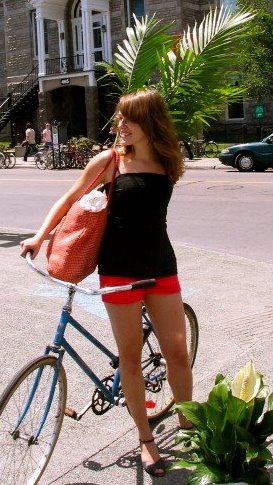
That's me outside the Royal Albert Hall in South Kensington, London, just moments after realising I got what I'd wished for.

Saturday, May 09, 2009

No duvets, pillows or desperation

Throughout London, there are signs and warnings indicating what not to do. It's the antithesis to Latin America, where you breathe, eat and sleep at your own risk, without warning of actual and imminent danger.

Some warnings I appreciate – keep left, look right – because I'm still new to the reversed flow of this culture. But others are universal common sense – basic warnings, and the privilege of a country where the most dangerous animals are knife-wielding children and my neighbours in Brixton.

I used to find it unsettling to think anyone needed to be reminded that there's wheat in Shredded Wheat, that children shouldn't play on scaffolding, and that old people can be slow. It bothered me that authorities express so little faith in the capacities of the kingdom's occupants that there are even expiry dates on fruit.

One morning, on my way to work, I came to understand the value of stating the obvious. No longer happy with my job – overwhelmed, exhausted, dissatisfied and numbed by ibuprofen – I read the warning on the hatch of a dank, dark charity drop-off bin along the way:

Do not enter.

And for a moment – faced with another day working for a motivational life coach with colossal and unrealistic expectations – I was thankful for this particular statement of the obvious, because I'd considered it.

Wednesday, May 06, 2009

I survived my job with pills

When I told people I had a job, instead of asking me what it is I was doing, they'd just say, "Wow!"

I try not to take this personally. Jobs and sunshine are rumoured to be on short supply in London. To the general population, any job is now considered a good one, so long as it pays.

That's not been my experience though. It's been relatively sunny and warm since I arrived, and I've been working as a Marketing/PR Assistant for exactly a month – exactly the same amount of time I've been letting this blog slide. I feel guilty, so please let me explain how I've allowed this to happen.

The short version involves me popping ibuprofen like Skittles and fighting the urge to lie down on the office floor in the fetal position. I beleieve, in the animal kingdom, that's called "learned helplessness". It's what impalas do when they're tired of running from the lions.

The long version involves me working for the most intense person I've ever encountered – even more intense than the Zapatista rebels in balaclavas who interviewed me to decide whether to allow me onto their reclaimed land in southern Mexico. Even more intense than the Cuban officials who interrogated me for two hours to determine whether I was a literary threat to the state, or a sun-seeking booze hound. And even more intense than my mother while she's cooking Christmas dinner.

Intense. And just as committed to the cause.

In this new job – my first real job in England – I worked for a life coach, a Cambridge-educated psychologist, a BBC reality TV presenter, an ex-Playstation advertising executive, a serial entrepreneur and a leader of a social innovation movement that's meant to change the world. Normally, working with a team like that would thrill me. But it wasn't a team. It was one guy. One guy, and I was his one assistant.

I was the 666th person to enquire about the job. Looking back, that may have been the first sign of what would come. My first day was the second sign. Following a 5-minute briefing in the shadow of Westminster Abbey, I was to memorise a list of tongue-twisted jargon I was quite sure no one would grasp, in the time it took to walk across London Bridge to our meeting. Thirty-six days in the country and I was about to mingle with mid-level MPs and quasi-celebrities at a televised Channel 4 event. Basically, flirting for funding. Every key word I remembered to use elicited a similar, "Sorry?"

That's when I realised I'd jumped – head first into London, and slightly more metaphorically off the London Bridge.

Since then, I've done everything from copy editing a motivational manual, hiring and firing suppliers, re-branding a product two weeks before its launch, writing copy for everything and acting as a sounding board about the trials of being a new husband, new father and entrepreneur. It's been a challenging experience, not because anything I've had to do was difficult, but rather because it was not humanly possible to meet deadlines tighter than American Apparel leggings. And it's hard to admit I'm human.

Working for a professional life coach means emotional sharing is part of the job description. He arranged the seating so that we faced each other all day long, never more than a metre apart, to allow a free flow of 'energies' between us. Energy, in plural. Toward the end, my 'energies' started getting so thick, you could cut them with a metaphysical knife.

As a coach, he expected his motivational tactics to help me accomplish more and more each day. Soon, 12-hour days weren't enough to keep up. So on occasion, I'd try to get a couple of hours in before heading to work for 9:00, where I'd remain until at least 6:30.

But that was just the first problem. My boss wasn't just a coach, he was a psychologist, which means I also began feeling like an office case study. Then, I began having to squish my 'energies' over to make more room for the elephant ego in the room, as is to be expected when working with a successful ex-ad exec. Because he is a serial entrepreneur, everything should've been done already, and exactly the way he's always done it. Every passing second is a second farther away from the deadline: yesterday. And more than that, working for a TV presenter requires grinning and bearing it all, and looking pretty no matter what.

He is a self-proclaimed leader of a social innovation movement, and as this experience just confirmed, I'm still not much of a follower.

So yesterday, I cleared my head of London's favourite past-time – the favourite after looking at page-3 boobs in public, discussing celebrities like they're close relations, emotionally investing in football, worrying about getting the last Tube home before midnight, and recycling tired jokes about Canadian English – and that's recession fear-mongering. I cleared my head, and I resigned.

"I think I'm gonna "peace out"," is precisely what I said.

As soon as I did, I knew it was the right decision. My 'energies' were pissing him off anyway. But I learned a lot during that intense second month in London, including a bit of wisdom from my now former boss, and I am going to "imagine beyond my imagination" what to do next.

Right now, that involves an icy cold beer in a sunny backyard in North London.


This is what the air traffic-heavy sky looks like every day in London, whether you can see it through the clouds or not. Quite often I remember what it felt like to land in Heathrow for the first time, wondering what might be ahead. The love part's going well. The job part? I could use a little help.

Saturday, April 25, 2009

Five hours in the Underground

Don’t ask George for directions. Or, if you do, at least buy one of his papers – they’re only 50 pence.

George, more cockney than elderly, has been vending papers at the London Bridge Underground station for 50 years. And for just as long, he’s begrudgingly given directions to strangers who’d rather ask him than read the station map. Paper-selling is the only job he’s ever had. I know, because I spent a few hours with him, promoting The Evening Standard on one of his many days. Paid £13 per hour to harass unwitting commuters during the rush, it was my first job in London. I’m not looking to make a career of it.

I’d signed up as an on-call promotions person with The Network. All I had to do, according to the Gumtree ad, was speak English and have good hygiene. Sweet. Most other jobs require a three-month unpaid internship and degree qualifications that don’t translate into Canadian. Hygiene I’ve got covered. Still, I wondered what I might be getting into. The Network. To me, it rang of The Matrix. Or, something more Orwellian. The Network. As it turned out, David Lynch should buy shares.

When The Network called, I’d been in London for a month already, and I was desperate for human interaction. The city’s too large and disjointed, and its population too rushed to allow much in the way of casual encounters. All fun is pre-scheduled, plotted on Google Maps and timed with the Transport for London journey planner. Everything between my house and my destination is white noise – queues, buses, underground trains, and swarms of bone, blood and flesh churning to Point B.

Occasionally a high heel gets stuck in an escalator and a woman topples backwards, or a fight breaks out, police dogs sniff for drugs, and drunks sing football anthems. When I began to cherish these interruptions, I knew I was really, really bored.

Then I discovered The Network. Fully ready to take London’s eye contact-avoiding culture head on, the prospect of having legal permission to harass thousands of Londoners at one of the city’s busiest stations sounded positively dreamy. So I agreed. From 3:30 to 8:30 PM the next day, London Bridge would be mine. And George the paper seller would be kind enough to share it.

Determined to suck the marrow from the experience, I began drilling George about his half-century of selling papers as soon as I arrived. I had time to kill anyway, while I waited for further instructions.

“Who’d you kill to get this primo spot, George?” And with this, my first question, George became an instant, unwavering ally. He didn't deny killing off the competition, so that was the last time I brought it up.

My team leader, Jessa, greeted me by the pitch – that’s promo lingo for newsstand – and introduced me to my fellow promo-girl, which is apparently what I’d become. Jessa’s skin was orange, her nails acrylic and hair platinum – a poofy synthetic coating over a solid Pinochet centre. When it came time to decide who was to work at which pitch – the one inside where it was warm, or the one outside in the rain – George insisted on keeping me. Bless him.

After introducing me to the team supervisors – a pale, balding thirty-something and a heavy-set bearded lady – who’d oversee my performance, Jessa handed me my sash and steamrolled off to be orange somewhere else. I was now an Evening Standard princess, as the sash implied, and I was about to promote the paper with all the sardonic pomp of a working migrant.

“Go on,” said the bearded lady, gesturing toward the turnstiles where thousands of people would emerge from the Northern line beneath the station. “Tell them the Standard is half price today.”

My amusement gave way a little, to make room for humiliation. A mob of tailored suits began closing in on me and I knew, to get through the next five hours, I’d have to seriously self-entertain. So, I made fun of myself, and it went over big.

“The paper’s half-price today,” I’d call out, then pause before finishing with, “and I came all the way from Montreal, Canada to tell you that.”

Most people laughed, but some just looked sad for me. I told them they were allowed. Then I moved on to soliciting candies and drinks, because I’d been yelling in an Underground station for hours.

“My mouth is really dry,” I’d yell in my new-found promo voice. “For a donation of candies or drinks, I’ll let you have the paper for half price today.” They liked that one, but no one offered me anything. No one but George who, with the profits from three papers sold, bought me a bottle of water and gave me a ink-smudged thumbs up.

So, I started making eyes at people, going saccharine, “You know, the paper’s half price today.” Some were suckered in. A few stopped to chat, which was for the most part regrettable. One even asked for my number, but he’d never have aced my hygiene requirements. Most smiled despite themselves, and a few just looked terrified. Those ones I prodded with, “But I’ll give it to ya cheap,” thrusting my hips a little – just enough to not get fired. Anyway, I was talking about the Evening Standard.

When people started asking me for directions, I knew I’d been there too long.

“If I knew how to get around in London, I wouldn’t be promoting The Evening Standard,” I'd answered. They gave me a look that said, fair enough, and queued up to ask George instead. He didn't mind so much though, because that night, his sales were up.


London Bridge Tube Station, originally uploaded by Fundo de Garrafa.

Tuesday, April 07, 2009

Surviving London

You may be wondering, considering my last few posts, whether it was my neighbourhood, a double-decker bus, bubonic smog, Margaret Thatcher or my extremely intense new job that killed me – because clearly that's the only way I'd ever take so long to update.

But you should know me better. It was the partying.

Look! There I am in my backyard with great intentions to write. It's not my fault the lawn was so irresistibly horizontal after a night out with some quality, new friends in London. That's not really juice, by the way. It's the hair of an extremely vicious orange dog.